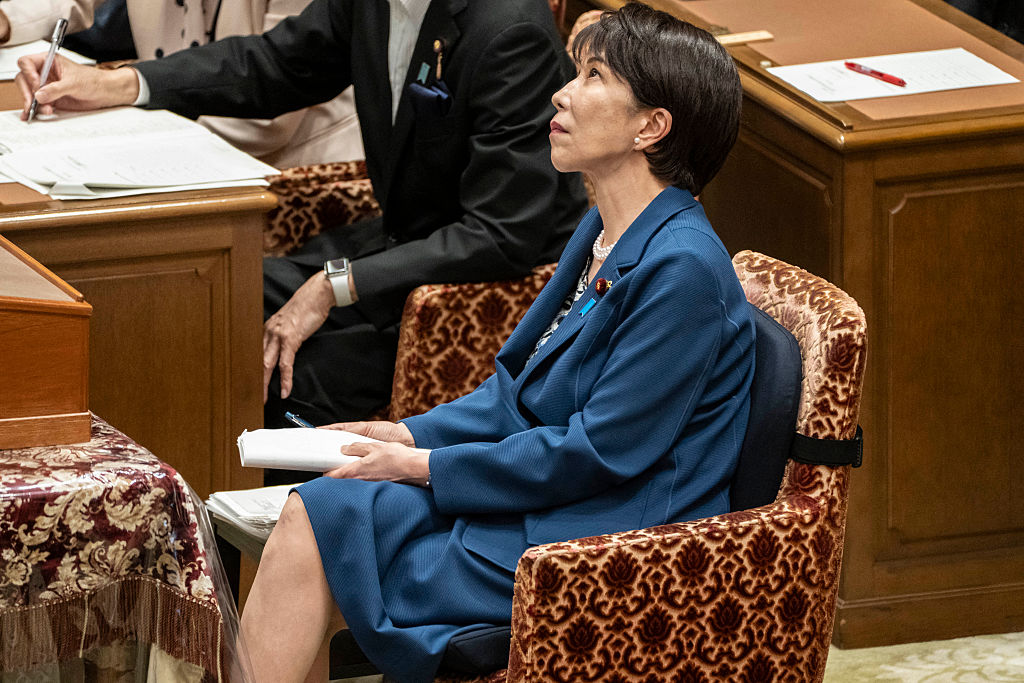
For Japanese Prime Minister Sanae Takaichi, a day off means more work.
As the country enjoyed a three-day weekend to celebrate the Marine Day national holiday, Takaichi said that she spent the weekend poring over policy documents and catching up on domestic work.
“I was able to get five hours of sleep for the first time in a while,” Takaichi posted on X on Monday night, noting that she was able to do ironing and sewing she’d put off. “Since taking office, getting zero to three hours of sleep has become the norm.”
“I can work hard again from tomorrow!” she added.
It’s not the first time that Takaichi has projected an image as a tireless worker. When Takaichi was elected president of the ruling Liberal Democratic Party in October, she proudly announced, “I will abandon the phrase ‘work-life balance.’ I will work, work, work, work and keep on working.” She also called on LDP members to “work like workhorses.”
In November, she told an Upper House Budget Committee session that she typically gets around two hours of sleep a night. She also faced backlash after summoning aides to the Prime Minister’s official residence at 3 a.m. that month to prepare for a Budget Committee session.
Takaichi, Japan’s first female Prime Minister, has enjoyed largely positive approval ratings, although her popularity dipped this month. The country is contending with a rising cost-of-living and a weak yen that hit a 40-year low this week.
Takaichi’s post may be an attempt to “persuade” the public that she is working very hard, says Li Hao, an associate professor at the University of Tokyo and a research fellow at the Japan Institute of International Affairs. It’s also “a kind of appeal” to the conservative voting bloc, he adds, showing that she is maintaining both her political work and traditional gender roles of women in the home.
But some say it’s a message that increasingly falls flat with young Japanese voters.
The post has drawn scrutiny from the Japanese public, some of whom argue that Takaichi is upholding an unhealthy and outdated standard in a country that has traditionally had a culture of overwork. Opposition lawmakers have also criticized Takaichi’s post, suggesting that she is overemphasizing quantity over quality of work.
“Resting is part of her job,” Yuichiro Tamaki, leader of the Democratic Party for the People, said at a press conference on Tuesday. “I wonder, would it be better to focus her valuable time on decisions and tasks that only the prime minister can handle?”
Takaichi’s allies have been quick to defend her. Chief Cabinet Secretary Minoru Kihara said on Wednesday that Takaichi understands the importance of work-life balance, and that she is making decisions that are “for the good of the nation and the people.”
Still, observers say the episode highlights a widening gap between traditional and evolving attitudes towards work in Japan.
Takaichi’s view is “increasingly an outlier,” says James Brown, professor of international affairs and political science at Temple University, Japan. “She represents this traditional view that many, including in her own party, have moved away from.”
Gradual shift away from overwork
The backlash suggests that the public’s “value system is changing,” Li says. “More and more people understand that the burden of housekeeping should not only be on women’s shoulders.” Some opposition lawmakers have also said it’s important as Prime Minister to delegate her work, and Li notes that housework could even be delegated to a housekeeping service.
Many online have also expressed skepticism towards Takaichi’s claims of sleeping less than three hours a night, Li tells TIME. But even taken at face value, many appear upset at the disregard of rest. Some critics have said that her lack of sleep could impact her health or affect the quality of her policymaking.
Still, Brown cautions that the social media backlash isn’t representative of the entire Japanese population, as older and more conservative people are more likely to hold onto traditional expectations around work and gender. In May, Yawata Mayor Shoko Kawata faced public criticism after announcing that she would become the first sitting Japanese mayor to take maternity leave.
Instead, the Takaichi criticism reflects a gradual shift in attitudes towards work and gender roles, especially among younger Japanese, Brown says. Brown tells TIME, anecdotally, that he has seen more young fathers take on tasks traditionally done by mothers, like pushing strollers or carrying their children around.
Traditionally, Japan’s work culture has rewarded self-sacrifice and long hours at work, at times at the expense of employee health and family life.
“The traditional expectation was that a big part of your identity is as an employee,” Brown says. Employees often felt a “duty to the organization that goes beyond your contract,” he adds.
“If there’s work that needs to be done, it doesn’t matter if your contract says you’re supposed to be out the door at 5 p.m., you continue on until it gets done,” Brown says. “Your boss is not just someone whom you report to; it’s someone you have significant obligations to.”
Typical expectations would include staying in the office until the boss leaves first. Traditional attitudes towards work also discouraged employees from taking holidays, as holidays were seen as a kind of privilege rather than a contractual right, Brown adds.
Public officials are traditionally equally expected to dedicate long hours and put their public duty over their personal lives.
However, several high-profile “karoshi” or “overwork death” cases have prompted labor reforms aimed at bettering work-life balance. In 2015, 24-year-old Matsuri Takahashi died by suicide after working more than 100 hours of overtime per month at the advertising company Dentsu.
Several Japanese bureaucrats also died by suicide in recent years in cases linked to overwork.
Attitudes are gradually shifting alongside policy changes around work regulations, Brown says. After Takahashi’s death, the government stepped up its Work Style Reform agenda, including capping overtime at 45 hours per month. More employers also understand that holidays help employee productivity, Brown says. Parts of the LDP have also shown more concern toward the issue given Japan’s ageing population and low birth rate, as young women may be less inclined to have children if they are expected to work long hours and to manage housework alone.
Some of Takaichi’s past remarks around work have drawn condemnation from the National Defense Counsel for Victims of Karoshi, which is led by Hiroshi Kawahito, an attorney who represented Takahashi’s family.
“Most people are regarding [Takaichi’s post] not as a role model,” Brown says, “but rather as an outdated and very negative way of addressing work-life balance.”


