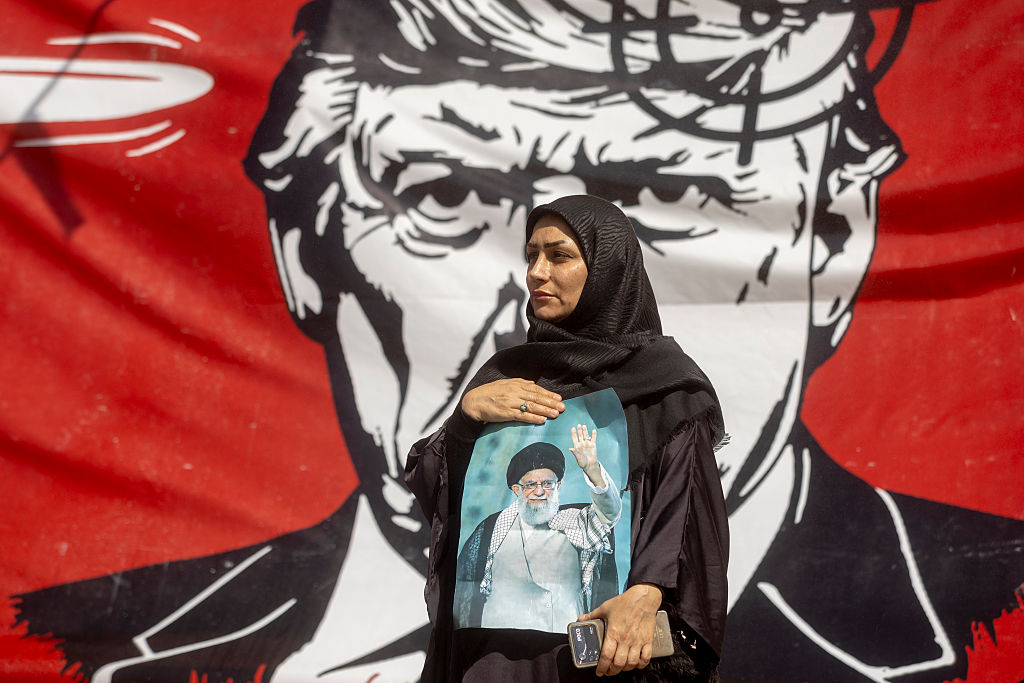
Fears of a return to full blown war are growing as the United States and Iran are increasingly trading military strikes. The memorandum of understanding the two countries signed after 40 days of American and Israeli bombing on Iran and Iranian strikes against the Gulf countries and Israel lasted barely a month before it unravelled.
The Trump Administration has revoked the sanctions waivers it offered Iran, reimposed the naval blockade of Iran’s ports, conducted heavy aerial bombing on more than a 100 military targets in the country. Iran has retaliated against American allies in the Gulf: Kuwait, Bahrain, and Jordan. The speed of this collapse reveals that Washington and Tehran signed an initial agreement without ever agreeing on what it was meant to accomplish.
Washington treated the initial agreement as the opening move in a process to restore freedom of navigation through the Strait of Hormuz, ease the economic strain of the closed waterway, and gradually constrain Iran’s coercive capabilities. Tehran considered it as a pause that preserved leverage while testing the Trump Administration's seriousness and appetite for a wider deal. Tehran never accepted that the agreement required it to relinquish influence over the Strait or guarantee unrestricted passage through it.
The gaps in interpretation hardened quickly into suspicion. Iranian officials concluded that the U.S. was using the lull to weaken them by degrees, opening a passage out of the Strait in coordination with Oman and working to disentangle Lebanon and Hezbollah from Iran’s orbit.
From Tehran’s perspective, the initial agreement had become a mechanism for extracting concessions. Iran responded by striking ships and reasserting its capacity to disrupt maritime traffic. Washington read the strikes as an outright breach and resumed military action.
Tehran and Washington are locked in conflict over the Strait of Hormuz, but it is not simply a dispute over the waterway.
For Washington, freedom of navigation was always a precondition for broader diplomacy. For Tehran, the threat to navigation was leverage to be traded away only within a comprehensive settlement. The United States and Iran were never negotiating the same thing.
Why Tehran is betting on escalation
Iran’s return to conflict is best read as a calculated gamble. Its leaders seem to judge gradual strategic erosion as more dangerous than another confrontation with the United States, and potentially Israel, whose willingness to strike Iranian territory independent of Washington remains a live variable in how far this escalates.
Above all, Tehran’s leadership fears a staged unwinding of its leverage. Once it stops threatening shipping and restrains its regional partners, those tools become difficult to recover. Escalation, in this logic, is meant to raise the cost of the standoff enough to force Washington back to the table on broader terms.
That wager rests on their accurate reading of President Donald Trump himself. Tehran expects him to want to avoid rising energy prices, American casualties, and another open ended war in the Middle East, particularly with midterm elections approaching. Iran’s strategists appear eager to challenge Trump before the mid-term elections rather than wait for a post-election return to war.
But Tehran may be misreading the source of Trump’s caution. He entered his second term with an aggressive projection of American power and appears to have approached Iran with the same assumption as he did with Venezuela: that overwhelming force could quickly compel a supposedly weaker country to submit. In doing so, he underestimated the resilience of the Iranian state. His reluctance to accept an open-ended war coexists with a deep aversion to humiliation, creating the risk that failed coercion will lead not to restraint but to further escalation.
The domestic trap in Iran
Iran’s internal politics make compromise harder still. Ayatollah Ali Khamenei’s nine-day, multi-city funeral allowed the state to project continuity after the death of their longstanding Supreme Leader and the bombing campaign that preceded it. The choreography also exposed real uncertainty and elevated calls for revenge. The absence of the new Supreme Leader Mojtaba Khamenei from public view, attributed to injury or security precautions, underscored how unsettled the distribution of power remains inside a factionalized system that still depends on internal consensus to function.
There was enough agreement among the Iranian leadership to sign the memorandum of understanding and test American appetite for negotiation. There is no formal consensus, however, and no faction willing to move first on anything that could be portrayed as surrendering leverage, legitimizing the bombing campaign, or handing Trump a clear victory.
A fatwa against Trump issued on Jun. 29 by Grand Ayatollah Makarem Shirazi, an influential and senior cleric, reinforces this dynamic. It recasts Trump not merely as the leader of a hostile state but as a personal and religious adversary of the Islamic Republic, which makes any future accommodation with him politically costly.
Continued conflict also benefits the Islamic Revolutionary Guard Corps (IRGC), which controls the state’s principal instruments of military and regional pressure. The longer negotiation can be framed as capitulation, the more that coercive leverage stays in the hands of the security establishment. Ayatollah Ruhollah Khomeini once described accepting the 1988 ceasefire with Iraq as drinking from a poisoned chalice. Today’s leadership does not yet believe continued resistance demands such a compromise, which is precisely why it has not reached for that chalice itself.
The risk of overreach
Iran may be securing short-term leverage, but it will come at the expense of its longer-term position. Continued attacks on shipping will grow harder for Gulf Arab governments to tolerate. They have spent years managing a careful balance with Tehran, but they are unlikely to indefinitely absorb daily strikes and open threats to trade, energy exports, and regional stability. If sustained, this strategy risks backfiring.
The Gulf states will lean harder on American protection and tighter security coordination rather than coming to see Iran as central to any workable regional order. The United Arab Emirates and Saudi Arabia are already developing plans to reduce their dependence on Hormuz by building alternative pipelines and ports. It also risks hollowing out the mediators’ role. Qatar, Oman, and Pakistan can broker diplomacy only while both sides continue to value that channel. Repeated breaches and widening strikes steadily narrow that space, and with it, Iran’s own room to negotiate a way out when it eventually decides it needs one.
Ultimately, Iran is running a familiar playbook of escalating to deescalate. By returning to conflict, it hopes to demonstrate that it cannot be weakened gradually and that no stable regional order can be built without it. This strategy only works if both sides preserve a credible path back to diplomacy. Without one, escalation will compound, hardliners will be empowered, mediators will lose patience, and every future concession will get politically harder for both governments to make. There is no durable military solution.
Tehran cannot compel Washington to abandon its regional interests, and Washington cannot eliminate Tehran’s ability to impose costs without risking exactly the wider war it says it wants to avoid. The only viable path forward is a revived, mutually understood memorandum of understanding covering maritime passage, sanctions relief, nuclear limits, and military restraint, with real mechanisms to verify compliance including a deconfliction channel to resolve disputes before they escalate.
Without that reciprocity, the pattern will likely repeat. Tehran will keep arming itself against disarmament, Washington will misread its leverage, and the next ceasefire will be just another interlude rather than a path toward any lasting exit from these wars.