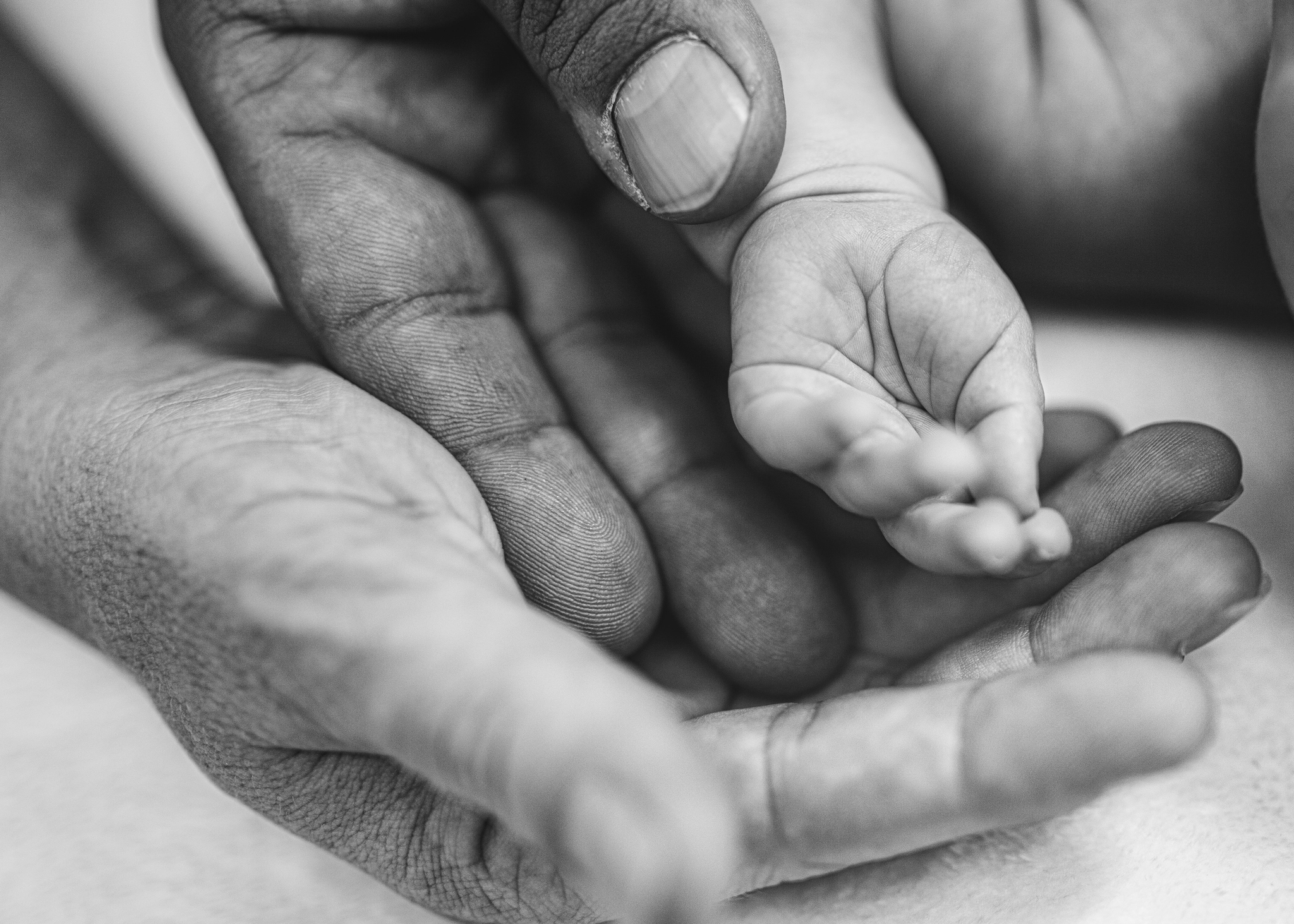
This Father’s Day, Americans celebrated all that dads do for our families and communities.
Now, we must say something that doesn't get said enough: the maternal health crisis is not only a crisis for mothers. It is a crisis for fathers, for babies, for whole families. And fathers are not bystanders to it—they can be part of the solution.
We come from different parties: a Democrat from New Jersey, a Republican from Arkansas. But on this we agree completely: a mother's life is not a red or blue issue. And dads have a crucial role to play in ending America’s maternal mortality crisis.
The United States has the highest maternal mortality rate of any wealthy nation, and the toll falls hardest on Black mothers and on rural families far from a delivery room. No party has a monopoly on that grief—or on the urgency to end it. We have each spent years calling attention to this issue and taking steps to address it once and for all.
In New Jersey, it has meant pairing progress at home with leadership in Washington. For years, Sen. Booker has led the Black Maternal Health Momnibus, the most comprehensive maternal health legislation before Congress: a package of more than a dozen bills that confront every driver of these deaths at once. The legislation would grow and diversify the workforce of doctors, midwives, and doulas. And importantly, it would invest in the community organizations closest to at-risk mothers, strengthen maternal mental-health care, sharpen the data on who is dying and why, and fight to make postpartum Medicaid coverage permanent, so that a mother's care does not end 60 days after she gives birth.
That national vision is grounded in what New Jersey has already shown is possible. A decade ago, the state ranked 47th in the nation for maternal mortality; today it ranks 28th, the result of extending Medicaid to a full year after birth, making doula care reimbursable, screening new mothers for conditions that too often go unspoken, and learning from every loss. Deep racial disparities persist, and the work is far from finished. But it proves the point: when leaders decide these deaths are unacceptable, the numbers can improve, and lives can be saved.
In Arkansas, addressing the maternal mortality crisis has meant building capacity where families need it most. This year, Sen. Boozman helped enact the PREEMIE Reauthorization Act, sustaining federal research on preterm birth and infant mortality through 2030. He has secured investment in labor-and-delivery capacity at the University of Arkansas for Medical Sciences and a new mother-and-infant health center at UA–Fort Smith, plus funding to grow the workforce. He has backed the state Maternal Mortality Review Committees, whose case-by-case findings keep confirming one truth: most of these deaths did not have to happen. And a $208 million Rural Health Transformation award now lets Arkansas confront the maternity care deserts the national conversation overlooks—because when the nearest delivery unit is an hour away, distance itself is a risk factor.
Which brings us back to fathers.
Many maternal deaths happen not in the delivery room but in the weeks after a baby comes home, once the visits stop and the world assumes the hard part is over. A father who knows the warning signs of preeclampsia or hemorrhage, who insists on care when something seems wrong, who gives a partner room to rest and be honest about how she feels, is no spectator to his family's health. He may be the reason his wife lives.
Partners who show up for prenatal visits, advocate in exam rooms, and carry their share at home measurably improve outcomes for mother and baby alike—a role worth honoring, and worth equipping more men to play.
So to America’s dads, our message is simple. Talk about maternal mortality at your kitchen table. Learn the warning signs. And tell your members of Congress, in both parties, that the richest country on earth should not be a dangerous place to become a mother.
We are a Republican and a Democrat who disagree on plenty. We do not disagree about this. Saving mothers is not partisan. It is the kind of thing a good father—and the greatest country on earth—must do.


