The U.S. and Iran appear to have traded the first major attacks since a cease-fire took effect in early April.
The United Arab Emirates and Oman reported suspected Iranian strikes on Monday, while the U.S. said Iran had targeted American and South Korean ships transiting the Strait of Hormuz. The U.S. military also announced that it destroyed seven Iranian small boats that had attempted to interfere with the U.S. mission to “guide” stranded ships out of the area, which began hours earlier on Monday. Trump announced the U.S. effort to restore shipping through the Strait, dubbed “Project Freedom,” on Sunday, prompting a warning from the Iranians that U.S. intervention in the waterway would be considered a cease-fire violation.
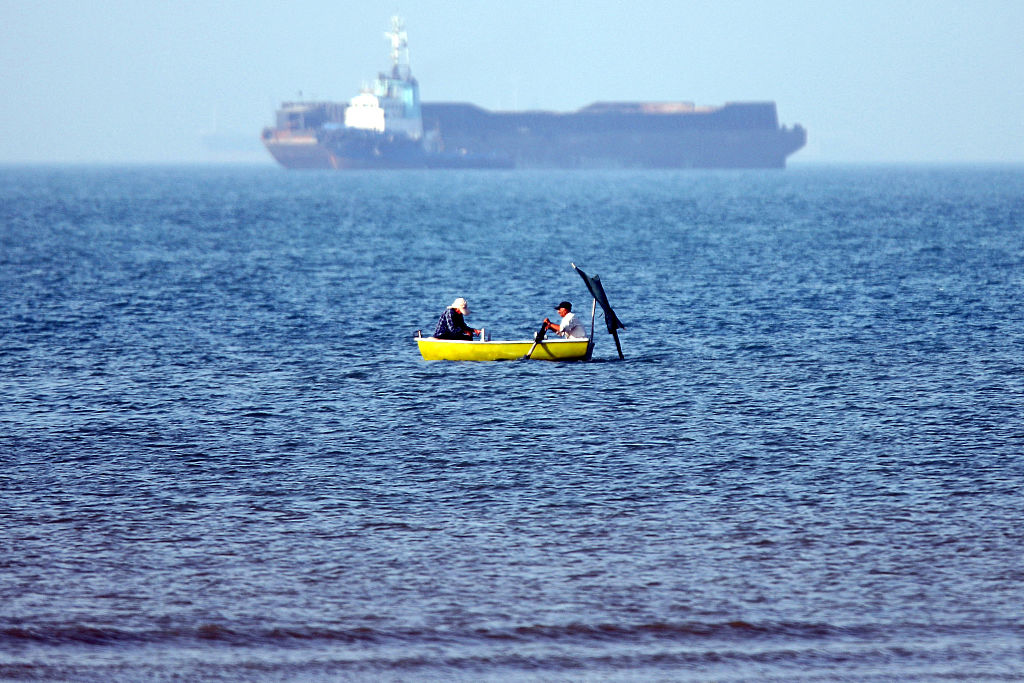
The attacks come as tensions have mounted around the Strait of Hormuz, a vital global energy and shipping corridor that has been effectively closed by Iran since early March in retaliation for the U.S. and Israel launching the war. Iran maintains that it has control over the Strait, allowing only vessels with its permission to pass through, an arrangement it wants to continue after the war. Meanwhile, Treasury Secretary Scott Bessent told Fox News on Monday that the U.S. has “absolute control” over the Strait with an ongoing naval blockade of Iranian ports depriving Iran of oil revenue critical to its already weakened economy. Maritime trackers have identified some Iran-linked vessels that have transited despite the U.S. blockade.
The new attacks threaten to unravel the fragile cease-fire between the U.S. and Iran even as the two countries continue to engage in indirect talks. The cease-fire was initially meant to last for two weeks beginning April 8, but was extended for further peace negotiations “until such time as [Iran’s] proposal is submitted, and discussions are concluded, one way or the other,” Trump said on April 21. While the terms of the cease-fire included the reopening of the Strait of Hormuz, Iran closed the Strait after a brief opening, citing alleged cease-fire violations including Israel’s ongoing attacks on Lebanon and the U.S. naval blockade.
After the latest attacks, American officials told the Wall Street Journal that Trump is torn between lashing out at Iran for its refusal to agree to major concessions to its nuclear program and avoiding an escalation that would reignite the war.
On Monday, Trump appeared to downplay the extent of the conflict in the Middle East and its impact on Americans, who have seen higher prices at the pump due to the closure of the Strait and broadly disapprove of the U.S. war.
“Our country is booming now, despite the fact that we’re in a—I call it a mini war,” the President said at the Small Business Summit at the White House. But hostilities in the Strait could bring the U.S. and Iran back to a head. Also on Monday, Trump reportedly told Fox News that Iran would be “blown off the face of the Earth” if it attacked U.S. ships involved in “Project Freedom.”
In a post on X, Iran’s top negotiator Mohammad Bagher Ghalibaf said the “security of shipping and energy transit has been jeopardized by the United States and its allies through the violation of the ceasefire.”
“Events in Hormuz make clear that there’s no military solution to a political crisis,” Iran’s Foreign Minister Abbas Araghchi posted on X. “As talks are making progress with Pakistan’s gracious effort, the U.S. should be wary of being dragged back into quagmire by ill-wishers. So should the UAE.”
“Project Freedom is Project Deadlock,” Araghchi said.
U.S. and Iran trade attacks amid ‘Project Freedom’
A South Korean cargo ship had an explosion and caught fire on Monday in what Trump said was an Iranian attack. No casualties were reported. South Korean authorities said they were investigating the cause of the fire and are reviewing whether or not to join U.S. operations in the Strait.
Trump said in a post on Monday that Iran had “taken some shots at unrelated Nations” in the Strait of Hormuz. Referring to the South Korean ship blaze, he said, “Perhaps it’s time for South Korea to come and join the mission,” echoing earlier unheeded calls for U.S. allies to send ships to secure the Strait.
Two U.S.-flagged commercial vessels transited the Strait on Monday, according to U.S. Central Command (CENTCOM). Danish shipping company Maersk said its Alliance Fairfax, one of the two U.S.-flagged ships, had successfully transited under U.S. military escort.
Trump said there has been no other damage to ships through the Strait, although he added that the U.S. “shot down seven small Boats or, as they like to call them, ‘fast’ Boats.” CENTCOM commander Adm. Brad Cooper told reporters on Monday that Iranian forces had “launched multiple cruise missiles, drones, and small boats at ships we are protecting” and that the U.S. military had “defeated each and every one of those threats through the clinical application of defensive munitions.” He noted that two U.S. destroyers had passed through the Strait on Monday to clear it for traffic but were not directly escorting commercial vessels. Iran’s cruise missiles were targeting both U.S. Navy ships and commercial shipping vessels, but no U.S. ships were hit, he said.
Cooper added that Iranian vessels were “strongly advised to remain clear of U.S. military assets,” but he did not say whether or not the attacks meant the cease-fire was over. Iran had earlier warned that American interference in the Strait would be considered a cease-fire violation.
Iranian state media denied Cooper’s claim that any of their boats were destroyed. Iranian forces had fired “warning” shots at a U.S. destroyer nearing the Strait of Hormuz in the Sea of Oman, Iran’s official news agency IRNA reported.
Trump offered mixed messages about the state of the Strait. He told Fox News on Monday that the U.S. naval blockade was “the greatest military maneuver in history,” adding that indirect negotiations were progressing well. “Iranians are being far more malleable than they have been in the past,” he reportedly said.
At the same time, he said American bases were prepared to launch new strikes on Iran, and that Iran would be “blown off the face of the Earth” if it targets U.S. ships.
U.A.E., Oman report attacks
The U.A.E. on Monday blamed a fire at the Fujairah Oil Industry Zone on a suspected Iranian drone attack, the first since the cease-fire began and a stark reminder of Iran’s tactic of retaliating against the U.S. by targeting Gulf countries that host American military bases. Three Indian nationals were taken to hospital for mild injuries, the Fujairah Media office said in a statement, adding that civil defense teams contained the blaze.
The U.A.E.’s Ministry of Defense said in an earlier statement that Iran had launched four cruise missiles, three of which were intercepted and the fourth of which fell in the sea. The country’s Ministry of Foreign Affairs said in a statement that it condemns the “renewed treacherous Iranian terrorist attacks” which “constitute a dangerous escalation and an unacceptable transgression.”
A residential building housing workers in Oman’s Musandam Peninsula, which borders the Strait of Hormuz and the U.A.E., also reported an attack on Monday, according to state-run Oman News Agency. Two foreign nationals suffered “moderate injuries,” while four vehicles and a neighboring building were damaged in the attack, the agency reported. The agency said authorities were investigating the incident.


