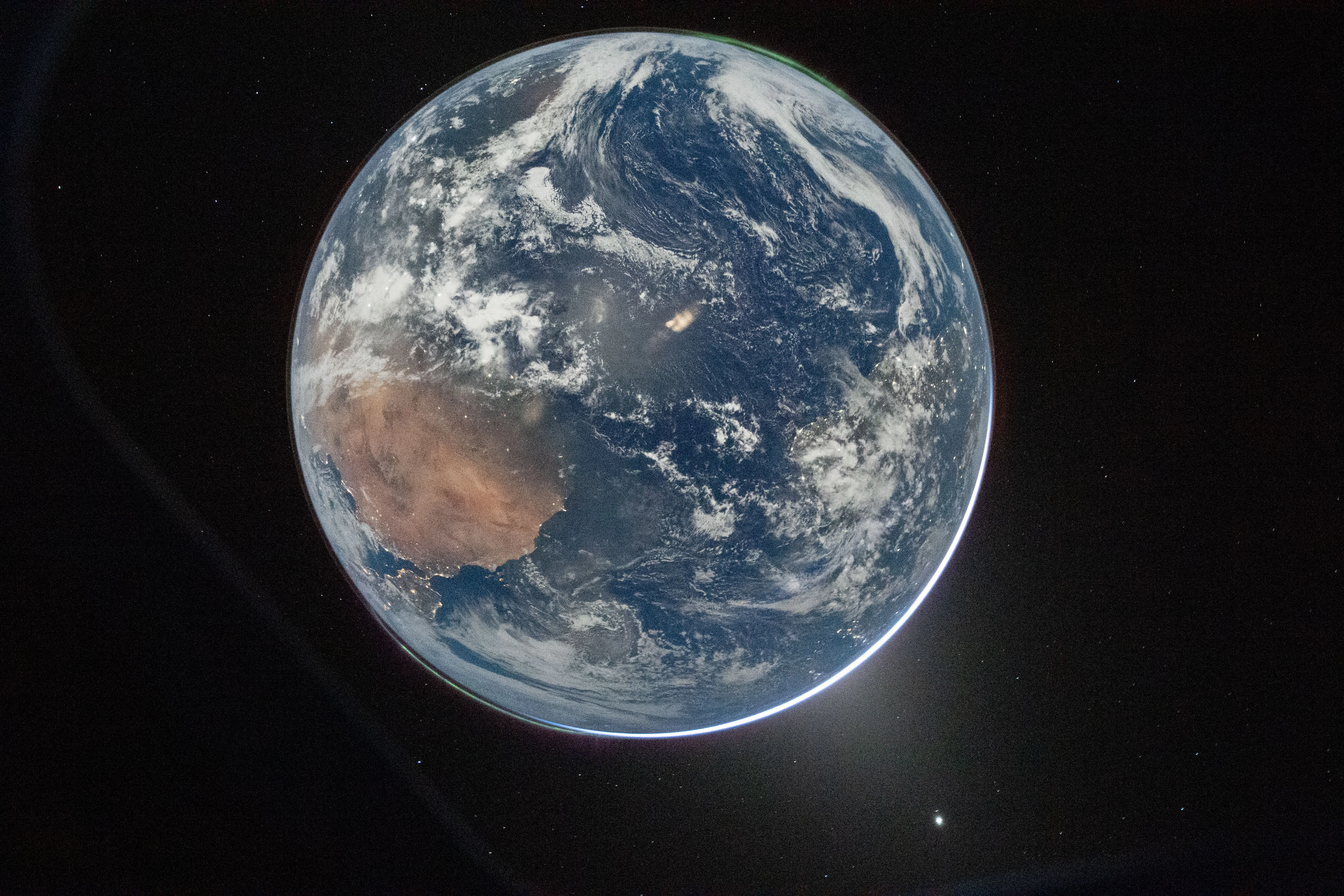
For four and a half days the crewmembers of Artemis II have been flying their spacecraft, but they have had a powerful copilot helping them along: physics. Ever since firing their main engine and blasting out of Earth orbit on Thursday, April 2, they have been on what is known as a free-return trajectory, flying a just-so path that will take them behind the far side of the moon and slingshot them automatically back home, aiming them to intercept the Earth on April 10.
Today, April 6, they reach the peak moment of this peak mission, when they make their closest approach to the moon and then set a human distance record, venturing 4,700 miles behind the lunar far side, besting a mark set by Apollo 13 in 1970, when the crew flew 158 miles behind the moon, earning them the distinction of traveling farther from Earth than any human beings ever have before. Here’s what else you need to know about today’s historic lunar flyby.
The barnstorming begins
At 12:41 a.m. ET today, Artemis II entered the so-called lunar sphere of influence, when the moon’s gravity took hold of the ship, effectively tugging it away from the pull of Earth’s more powerful, but now-distant gravity. The crew couldn’t feel the handover, and even if they could, they’d have slept through most of it, with their lights-out rest period beginning at 2:20 a.m. Reveille was scheduled for 10:50 a.m.
Once awake, the four-person crew—commander Reid Wiseman, pilot Victor Glover, and mission specialists Christina Koch and Jeremy Hansen—will set to work, preparing to orient the spacecraft so that its windows are pointed toward the moon, allowing them to survey and photograph surface features for both cartographic and geologic purposes.
“[There will be] imagery taken with the Orion vehicle cameras that are mounted external to the vehicle,” says Kelsey Young, Artemis II lunar science lead, “but it's crew descriptions which actually is our highest priority data set.”
A record falls
At 1:00 p.m. live coverage will begin on the NASA+ streaming platform and the NASA app, and that coverage will happen at just the right moment. Less than an hour later, at 1:56 p.m. the crew will surpass the Apollo 13 record, travelling 252,757 miles away from Earth, compared to Apollo 13’s 248,655 miles. At 2:10 p.m., the crew will make remarks acknowledging the record and paying tribute to the Apollo 13 crew. It was only on August 7, 2025 that Jim Lovell, the commander of the crew and its last surviving member, died.
At 2:45 p.m., the crew will have completed the alignment of the spacecraft to maximize the lunar views visible through its five windows and begin their photographic and eyeball observations of the surface. At 6:47 p.m., the spacecraft will pass fully behind the moon, beginning a 40-minute blackout period during which radio transmissions will be blocked by the lunar bulk and no communication will be possible.
On Christmas Eve 1968, Apollo 8 became the first crewed spacecraft to orbit the moon. After 10 revolutions, the crew fired their engine to break out of orbit and return home. That critical maneuver happened during the communications blackout, meaning no one on the ground knew if the engine burn had been successful or if the crew was trapped in lunar orbit. It was only when the ship appeared from behind the moon that Lovell, who flew that mission too, could report the happy news that the burn had worked. “Houston,” he said, “please be informed that there is a Santa Claus.”
Artemis II’s closest approach to the moon will occur during blackout, at 7:02 p.m., when the ship will be just 4,066 miles above the lunar surface. That distance isn’t much compared to the quarter million miles the crew will have traveled to get to the moon, but it’s a lot next to the mere 60-mile distance at which the Apollo astronauts would orbit the moon. At 8:35 p.m. the crew will be treated to a dramatic sky show when they witness a solar eclipse, as the moon moves into the path of the sun.
Homecoming
At 9:20 p.m., the astronauts will conclude their lunar observations, and at 9:32 p.m. the solar eclipse will end. At 10:50 p.m., the crew will hold a live broadcast, as physics again steers their ship away from the moon and back toward Earth, aiming for a Pacific Ocean splashdown on April 10 at 8:07 p.m.—the first splashdown by a lunar crew since Apollo 17 returned to Earth on Dec. 19, 1972. Before blasting off from the moon, Gene Cernan, the commander of that mission, said, “We leave as we came, and, God willing, we shall return, with peace and hope for all mankind.” That return, 54 years in the making, will soon be in the books.


