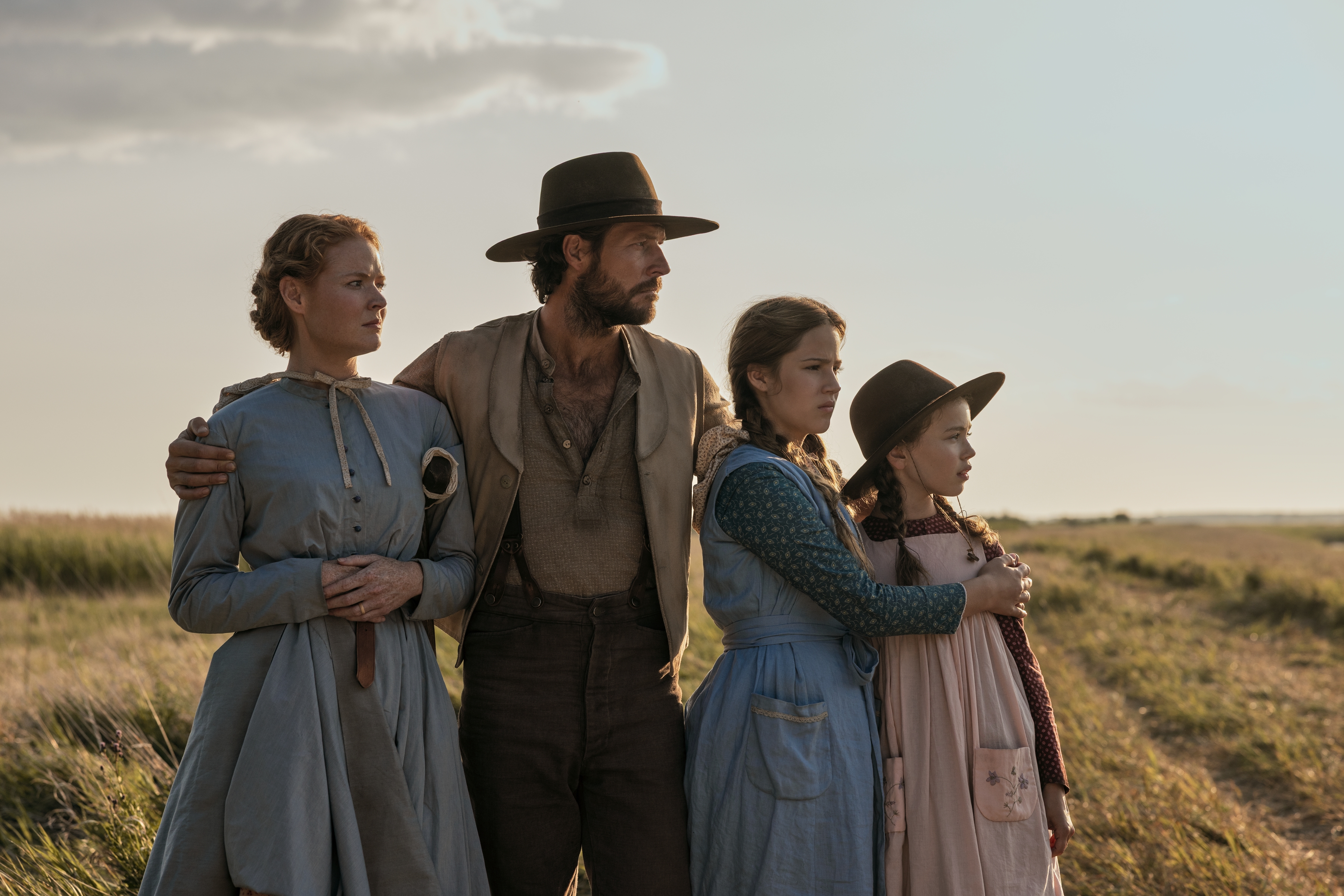
Little House on the Prairie is contested territory. Like the Osage land where author Laura Ingalls Wilder’s family squats in the novel that gives the series its title—as well as most of the cultural artifacts we call Americana—it is the subject of mutually exclusive claims. When they debuted in the 1930s Wilder’s autobiographical children’s books about growing up on the frontier offered something vanishingly rare: adventure stories whose hero is a brave little girl. Michael Landon’s long-running TV adaptation, which premiered in 1974, transformed Little House into comfort food, broad-minded but schmaltzy. Wilder’s work has since faced criticism for depicting some ghastly attitudes toward Native Americans. (In one egregious example, a character says: “The only good Indian is a dead Indian.”) And in recent years, the image of a white pioneer family in homespun garb has been impossible to separate from the reactionary tradwife trend.
So loaded is this iconography that the very existence of Netflix’s heavily promoted Little House on the Prairie reboot, whose first season is now streaming, might suggest conservative pandering. Yet the series’ creator, Rebecca Sonnenshine, makes it clear from the beginning that she is determined to take her retelling in the opposite direction. Within its first 10 minutes, the show introduces the Ingallses to a helpful Black doctor (based on a real person who also appears in the book) and a Native American family much like themselves. These characters become the conscience of a volatile community in this solidly built adaptation, which takes admirable care in depicting a wild girlhood on stolen land but leaves little room for joy.
The original Little House series quickly moved past the events of the eponymous book, in which the family briefly settles in Kansas, on tribal land known as the Osage Diminished Reserve, situating the Ingallses more permanently in Minnesota. Netflix’s take differentiates itself by devoting its entire first season to the earlier period. Charming patriarch Charles, a.k.a. Pa (Luke Bracey), rolls out of Wisconsin to seek his fortune on the frontier, with a wife, Caroline (Crosby Fitzgerald), who turns out to be pregnant, and two daughters in tow. The eldest, Mary (Skywalker Hughes), loves school and boys; on the other side of puberty is her kid sister, Laura, a spitfire tomboy brought to vivacious life by Alice Halsey. An early encounter with wolves sets the tone for a succession of hardships: malaria, money troubles, a home invasion.
Although the U.S. government has yet to finalize its purchase of this Kansas territory from the Osage, settlers are already building out the town of Independence. Ambivalent about leaving Wisconsin, Caroline is befriended by the officious Jemma James (Mary Holland), whose husband, Eli (Michael Hough), is a railroad man. This self-anointed first couple of Independence represents traditional, white America, looking to reproduce its institutions and values and racism and xenophobia in the West. Their Victorian house looks preposterous in this dusty hamlet.
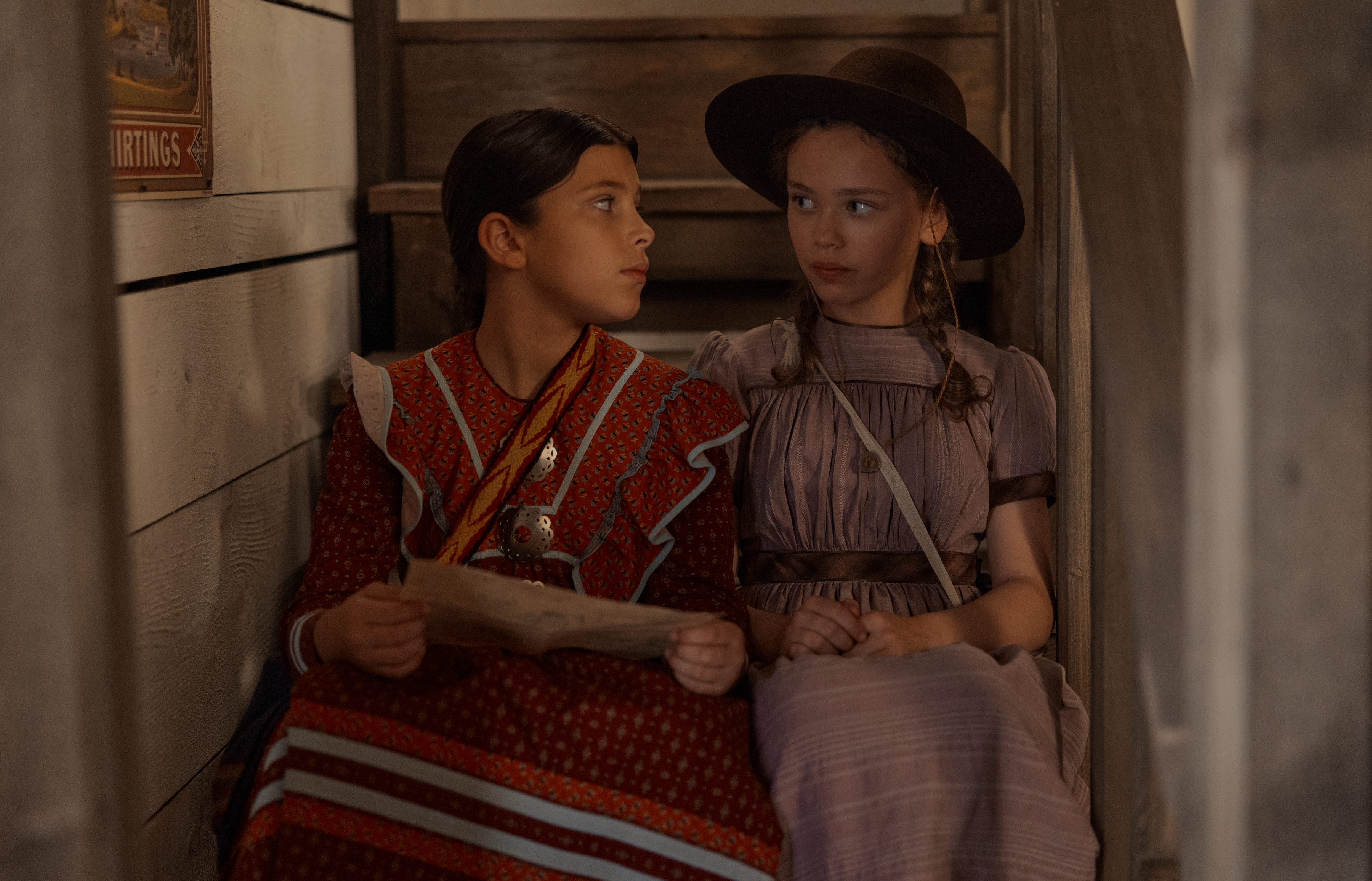
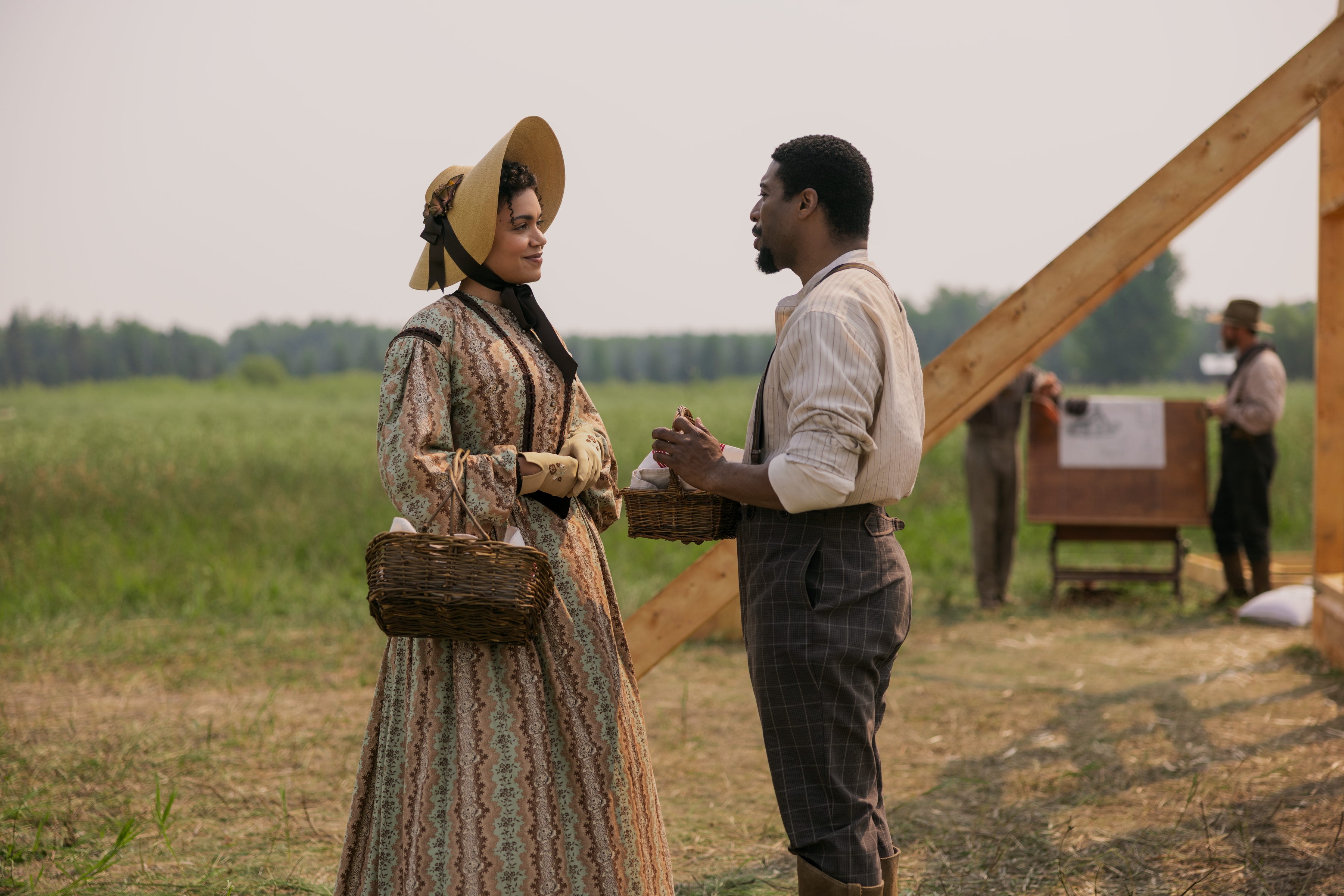
The area’s more diverse and less conventional residents prove to be better friends to the Ingallses. Charles builds their cabin with help from a kind widower and Civil War veteran, John Edwards (Warren Christie), who struggles with alcohol; Edwards’ sometime companion (Rebecca Amzallag) is a fiercely independent bar owner. In between saving lives, Dr. Tann (Jocko Sims) courts a shopkeeper (Barrett Doss) who is patient about settling debts. And Laura’s fast friendship with an Osage neighbor, Good Eagle (Wren Zhawenim Gotts), connects the girls’ families. Both relatively tolerant, despite the mothers’ initial worries about outsiders, the households mirror one another. Yet we also see the Native American characters on their own. As Good Eagle’s father, William Mitchell (Meegwun Fairbrother), a farmer and translator who believes that chasing interlopers off his people’s land would be futile, is drawn into negotiations between the Osage and the Americans, the question of the Ingallses’ complicity becomes unavoidable.
It would be irresponsible, if not impossible, to recreate the apparently apolitical Little House I grew up with as recently as the 1990s, when girls passed the books around elementary school classrooms and fell asleep watching reruns of the show on sick days. Necessary reckonings have pulled the deepest wounds of American history to the surface, fracturing the public into factions of the wronged, the guilty, and those in hysterical denial. The Wilder family was, itself, explicitly political. The Libertarian Party presidential candidate Roger MacBride, a protégé of Laura’s daughter and collaborator Rose Wilder Lane, inherited Wilder’s estate.
Sonnenshine’s intentions are noble in transforming Little House into a vision of frontier multiculturalism battling entrenched white supremacy, even if the show suggests a dubious moral equivalence between the Ingallses and the Mitchells. Its painterly exterior shots, all sun-dappled meadows and nights lit by campfire, surpass aesthetic expectations for Netflix fare. Halsey and Fitzgerald give their characters real energy and depth.
But for all the many fiddle-led family sing-alongs that comprise perhaps its greatest concession to the trad crowd, the series feels a bit flat. Too many characters come across as generic nice people, leaving the Jameses to entertain us with their priggish behavior (and they’ve got nothing on the original show’s iconically bratty Nellie Oleson). Episodes like the Christmas-set “Peace on Earth” can get so wrapped up in beatifying the Ingallses, with moralizing monologues and wordless moments of wonder, that they drag. Although it’s been updated for the streaming era with a serialized plot and revisionist overtones, this Little House suffers from the same cloying excesses as its predecessor. More childlike mischief might’ve helped. Yet instead of contorting the Ingallses into the people we wish they’d been, maybe it’s simply time we acknowledge that theirs may not be the enduring story we once imagined it to be.


